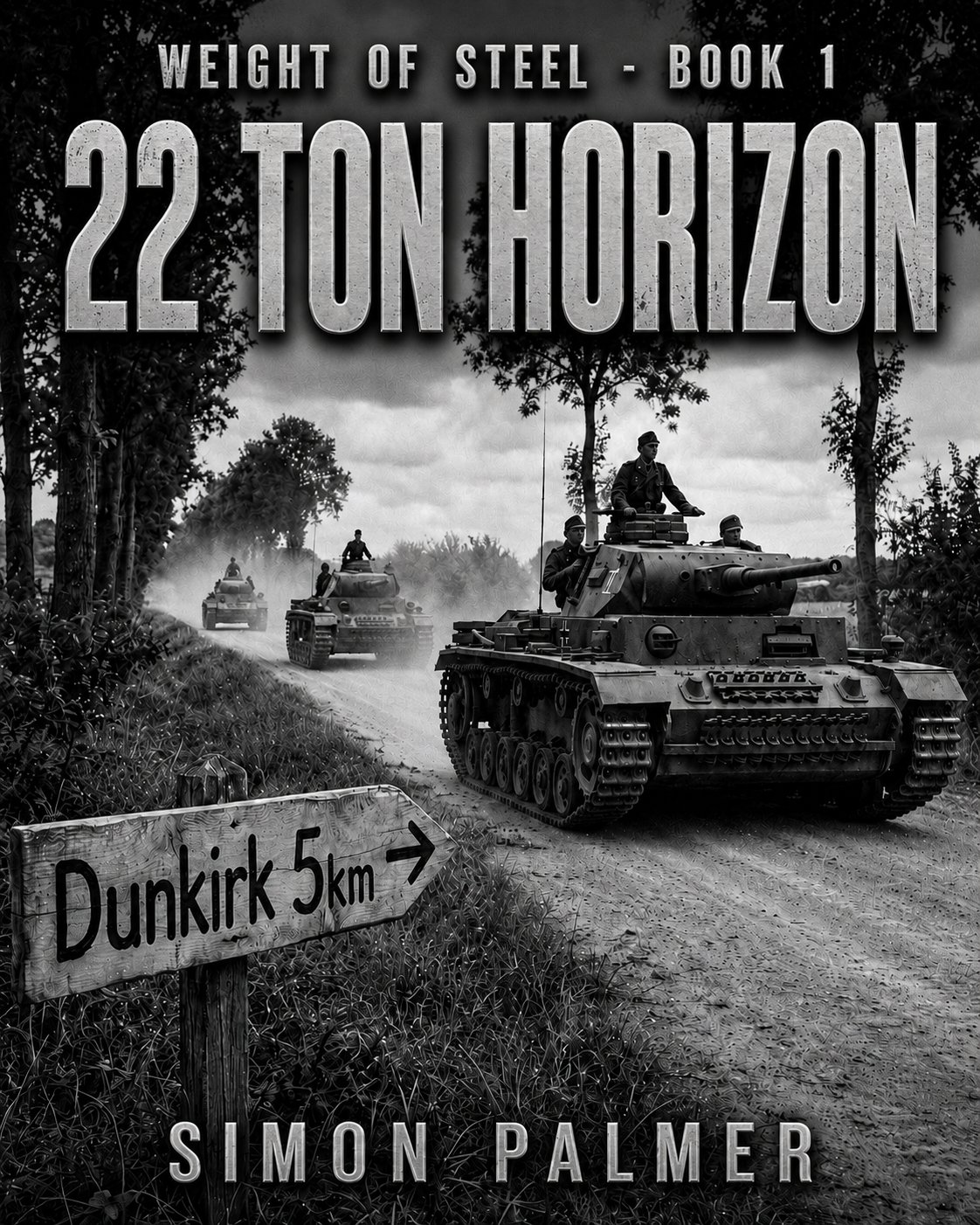
22-Ton Horizon
May 1940. A German Panzer III company punches through the Ardennes in the breakthrough that will stun the world. Commander Franz Kroll has trained for this. His driver can find a route through anything. His gunner doesn't miss.
For six weeks, nothing can stop them.
But Kroll keeps a log — not the official kind. The kind that records what the orders don't say. The fuel that didn't arrive. The infantry that couldn't keep up. The enemy tanks that took more rounds than they should have.
France is a victory. Kroll writes it down exactly as it was.
Because the maps on the table have already been turned east.
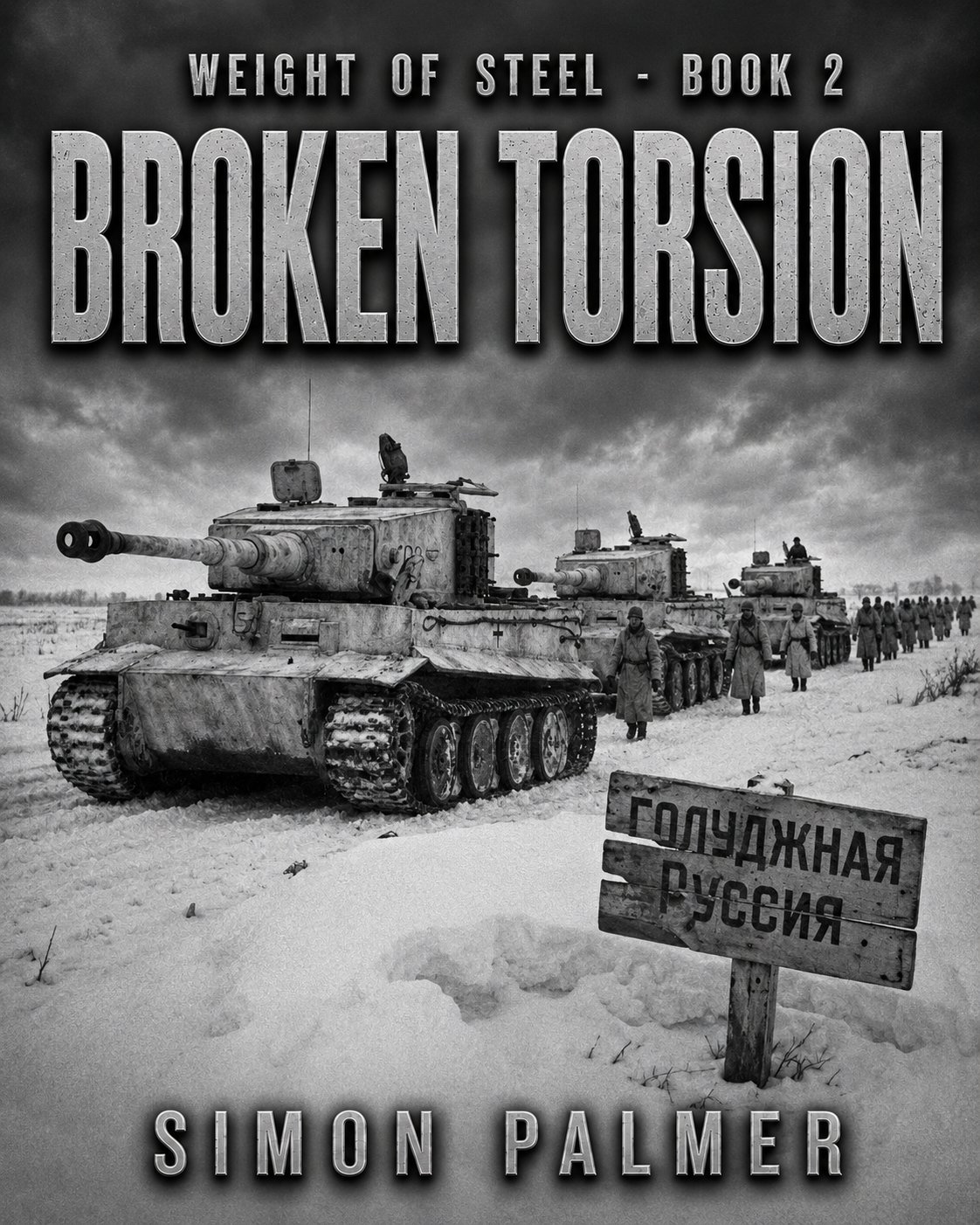
Broken Torsion
June 1941. Kroll's crew crosses into the Soviet Union with three million German soldiers behind them. Three weeks later, they discover their tank can't penetrate the frontal armour of a T-34.
The war just got harder.
Over five hundred days — through the mud of autumn, the killing cold of Russian winter, and the grinding siege war outside Leningrad — Kroll keeps his crew alive through the same method he's always used: knowing his vehicle better than the manual does, knowing the ground better than the map does, and writing down everything the official record leaves out.
The Tiger I that eventually replaces the Panzer III can destroy any Soviet tank it faces. It can't fix the supply lines. It can't bridge the rivers it's too heavy to cross.
The exchange ratio looks good on paper. Kroll's log tells a different story.
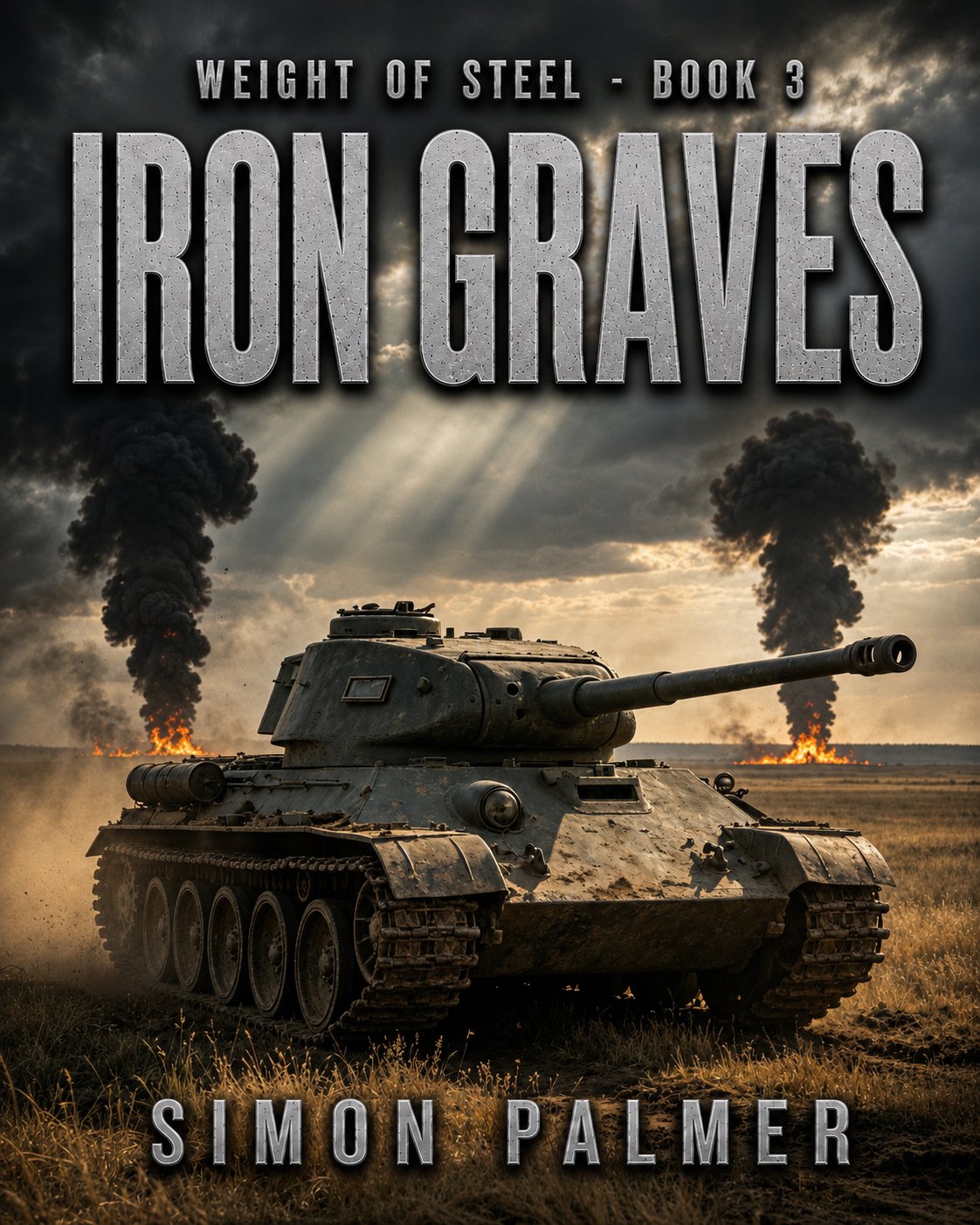
Iron Graves
Summer 1943. The German army's last great offensive in the east launches into the biggest tank battle in history. Kroll's new vehicle — the Panther — is faster than the Tiger I, better-armed, and prone to catching fire. The Soviet forces have spent months digging in, laying mines, and waiting.
At Prokhorovka, in the smoke and chaos of close-range armoured combat, Kroll's crew fights for its life. They survive. Kroll sits down with his log and runs the numbers.
Eight hundred uncommitted Soviet tanks. A German reserve that doesn't come close.
The retreat begins. Across the Ukrainian steppe, Kroll fights a different war now — not to advance, but to hold on long enough to pull back, to preserve the crew, to keep the record.
Three Panthers abandoned on the retreat. One King Tiger that weighs sixty-nine tonnes and can kill anything it faces, if only it can get there before the fuel runs out.
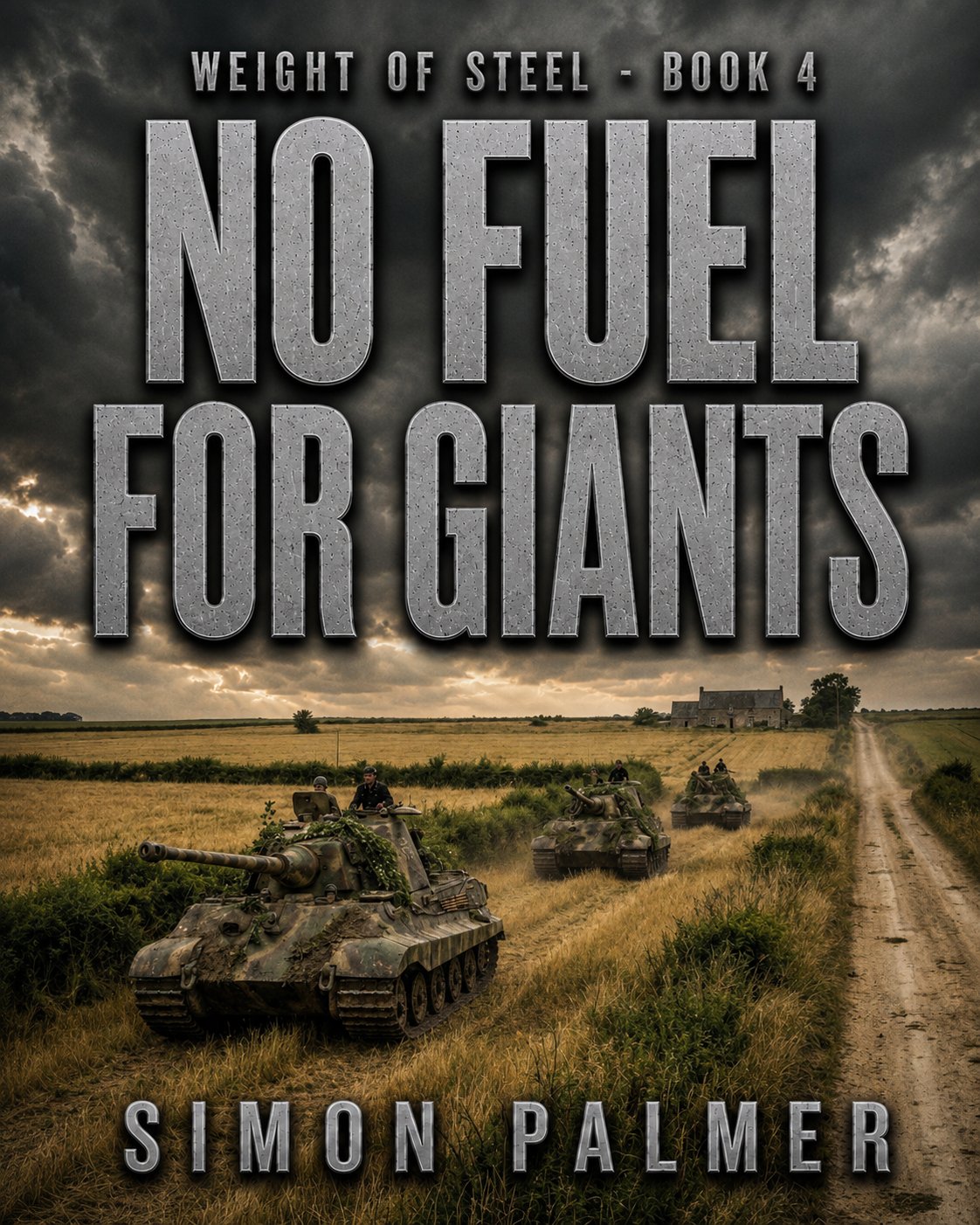
No Fuel for Giants
June 1944. Kroll's King Tiger arrives in France as the most powerful tank on the Western Front. Sixty-nine tonnes of armour. An 88mm gun that can kill a Sherman at two kilometres. And a fuel tank that empties faster than the supply lines can fill it.
The war Kroll faces in Normandy is not the war he fought in Russia. The Allies have learned. Their tanks work together with infantry and aircraft in ways the German army can't match. Every bocage hedge is a potential ambush. Every bridge is a question Kroll's driver has to answer.
Told through four perspectives — Kroll's crew, a British Firefly commander who has been studying German armour since 1940, an American tank destroyer sergeant who wins by choosing his ground, and a French woman who knows every bridge in the sector — No Fuel for Giants drives toward the end of the war at full throttle.
The fuel does run out. That's not the end.
Reading Order
The same five men. The same crew log. France to Germany. Read in order — each vehicle is the measure of what the war has become.